At DigiAlturas, we believe in crafting digital excellence through innovative strategies and creative mastery.

Contact Information

  Office no:#104, 13th floor, Manjeera Trinity Corporate Building, KPHB Phase 3, Hyderabad 500072

Follow us

Social Media Social Media Marketing

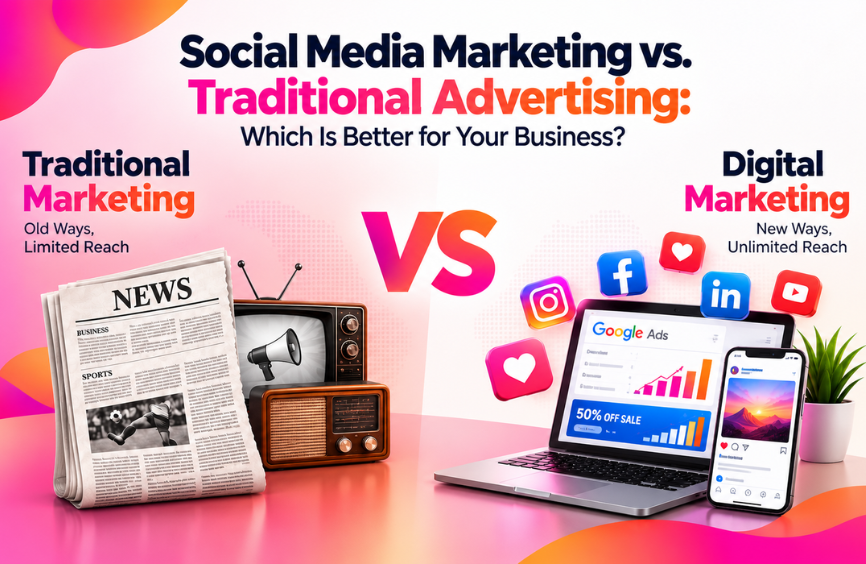
Social Media Marketing vs. Traditional Advertising: Which Is Better for Your Business?

A generation ago, choosing where to advertise mostly meant picking a newspaper, a radio station, or a billboard. Today, a neighborhood bakery can launch an Instagram campaign in an afternoon, while national brands still invest heavily in television.

With so many options, the business owners we work with at DigiAlturas rarely ask whether social media marketing works. They ask where their next dollar should go. The honest answer depends on your audience, your goals, and how you measure success.

What Is Social Media Marketing?

Social media marketing uses platforms such as Facebook, Instagram, LinkedIn, YouTube, and TikTok to reach and engage customers. It has two parts. Organic activity includes posts, videos, and replies to your community. Social media advertising means paying to show your content to specific audiences, chosen by location, age, interests, job title, or past interactions with your business.

What Counts as Traditional Advertising?

Traditional advertising includes television, radio, print, billboards, and direct mail. These channels remain relevant, especially for reaching audiences who spend less time online, building a strong presence in a local market, or reaching people when they aren’t looking at a screen, such as during a morning commute.


Key Differences Between the Two Approaches

Audience Targeting

Social platforms let you target narrowly and retarget people who have visited your website. Traditional media targets by channel and geography, meaning a station’s listeners or a publication’s readers. That reach is broader, but you also pay to reach people outside your market.

Cost and Budget Flexibility

Social campaigns can start small and be adjusted daily. Traditional channels often require upfront commitments plus production costs for a TV spot or print run. Social isn’t free, though. Good creative takes time, and ad costs can rise in competitive industries.

Reach and Scalability

Television can deliver mass reach almost instantly. Social advertising usually scales step by step: you identify the ads that perform, then increase budgets and expand audiences behind them.

Engagement and Interaction

Social media is two-way. People comment, share, and message you directly, which builds relationships but also means responding publicly to criticism. Traditional ads communicate in one direction.                               

Performance Tracking

Social platforms report clicks, cost per lead, and conversions in near real time. Traditional campaigns are harder to measure but not impossible. We often recommend unique phone numbers, promo codes, QR codes, or dedicated landing page URLs so each offline ad can be tracked.

Speed of Campaign Changes

A social ad can be edited, tested against alternatives, or paused within minutes. Once a mailer is printed or a TV spot airs, it stays as it is.

Building Brand Awareness

Repeated exposure in trusted media can build familiarity and credibility, which is why a billboard on a busy road still carries weight. Social media also builds brand awareness, particularly through video and shares, but crowded feeds mean attention is brief.

When Each Approach Makes Sense

Social media advertising often fits businesses with a clearly defined audience, a limited or flexible budget, a need for measurable results, or offers they want to test before scaling.

Traditional advertising may still be useful when your customers skew older or less digital, when you serve a broad local population, or when a launch requires wide awareness quickly.

Why Combining Channels Often Works

The channels frequently strengthen each other. A radio spot or billboard introduces your name, a prospect later recognizes it in a social feed, and retargeting ads follow up after they visit your website. The key is keeping the message and offer consistent everywhere.

Questions to Ask Before You Decide

  • Where does your target audience spend its time, online and offline?
  • Is your main goal awareness, leads, or direct sales?
  • How will you measure whether a campaign worked?
  • Can you produce quality creative consistently?
  • What budget can you sustain over several months, not just a few weeks?

Conclusion

Neither approach is better for every business. Social media marketing offers precise targeting, flexible budgets, and measurable results, while traditional advertising provides broad reach and established credibility. Start with your audience and goals, test carefully, and shift budget toward what the data supports.

If you’d like help deciding where social fits in your plan, explore DigiAlturas’ social media marketing services. Our team can help you build campaigns that match your goals and budget.